
Why is the Game Developers Conference relevant for brands?

My first encounters with the 3D space.
My first encounter with the 3D space came about when I wanted to place 3D models in my videos so that they looked real. In my research, I also came across the tool "Unreal Engine", which is often used for animation. When I started working with it, I realised that I could not only animate 3D objects here, but also assign logic to these objects. This means that I can assign gravity to this 3-dimensional sphere by saying: “Fly in that direction when you collide with this or that thing.”
At the time, I realised that you can tell large, complex stories in these virtual spaces using all these tools. Moving away from the 2D video that you watch, you can now interact with all the content embedded in a story. At the same time, I realised that computer games have been doing exactly this for years. The factor that has now changed is that games, or these 3D spaces, are becoming increasingly accessible on all devices thanks to growing computing power, and interest in interaction has increased.
It is not about all of us becoming gamers, but about the fact that people have always been triggered by game mechanics – we all know it. On the other hand, video content has now become so accessible and easy to create that it is no longer just about creating it and thereby exciting people. They want to be part of it. They want community. They want more than just watching. In the metaverse, they can interact.
So what is the difference between games and the metaverse?
As mentioned before, the whole thing is far more accessible than it was a few years ago. Specifically, this means that we can now build large multiplayer game worlds where many people can interact at the same time. Roblox, Minecraft and Fortnite are great examples. Many young people meet here to play together. They chat via audio, some via video, but they interact with each other and with the content they see.
Another exciting point is that developing your own games used to be extremely time-consuming. Just under a year ago, Epic Games, the company behind Fortnite, announced that it would release a new editor that allows anyone to build their own games with their own logic. It was and is not the first public editor, but for me it was a milestone that such a platform now also accepts user-generated content. You have to imagine it as having a platform like Instagram where you can upload your own content. Now these platforms are taking things one step further.
Epic Games has been making millions for years from people spending money on its systems. People who build successful maps receive money from Fortnite. This is slowly creating an entirely separate system of creators and platforms. Since the launch of Creative 2.0/UEFN, Fortnite has paid 320 million dollars to its creators. Roblox paid 2023 741 million US dollars to its community creators. Perhaps some people now recognise the connection I see here with platforms such as YouTube, Instagram or TikTok. Here too, everyone who produces content for the platforms is rewarded depending on how much engagement and how many clicks they receive.

Source: GDC 2024

Source: GDC 2024

Source: GDC 2024
Why is this exciting for brands and companies?
Imagine someone not just watching a video from your company, but experiencing your brand. They can become part of your brand experience. Your brand creates a story that consumers can experience. A world of its own, with its own rules. This can be used for brand awareness if you want to immerse users who are already online in your brand. Or you can use it for recruitment: young people who are faced with challenges set by you as a company right at the start of the process – precisely where they feel comfortable, in a playful environment.
Why is this now better than a video? You can watch a video for 2-3 minutes, if that is even realistic given today's attention span, and you know no more about the viewers than you did before watching the video. Players can act; they can choose A or B. While they are viewing the content, you receive direct feedback. Another exciting factor, in my opinion, is that most people only watch a 2-3 minute video 1-3 times, whereas people spend days, weeks, years playing games! There are now entire championships centred solely on gaming.
Now follow 3 successful brand examples that show how brands can get involved in these worlds:
Nike’s Airphoria in Fortnite
One outstanding example is Nike’s ‘Airphoria’ in Fortnite, an immersive Air Max-themed world developed with the support of Fortnite’s Unreal Editor. Airphoria allows players to experience Nike trainers in a virtual world and serves as a bridge between the digital and physical worlds. This initiative shows how brands can find new ways to interact with their fans and present their brand through the metaverse.
Source: https://www.epicgames.com/site/en-US/news/nike-debuts-airphoria-in-fortnite?sessionInvalidated=true
Coachella in Fortnite
Coachella has collaborated with Fortnite to expand the festival digitally. Players can explore the virtual Sahara Tent Island. This virtual world offers musical mini-games, hidden remix rooms and more. New Coachella outfits and items are available in the Fortnite shop. This project shows how the metaverse can be used to expand cultural events and reach a wider audience.
Source: https://www.coachella.com/coachella-fortnite
NIVEA’s world in Roblox
Another impressive example is NIVEA’s presence in Roblox with the ‘Nivea Tower Run’. Within just three days of its launch, the NIVEA world achieved impressive visitor numbers. The world enabled users to interact with the brand in a virtual environment, significantly increasing engagement and brand loyalty.
Source: https://www.roblox.com/de/games/14978690674/NIVEA-Tower-Run

Who is the metaverse relevant for?
For everyone who wants to appeal primarily to young target groups – see the NIVEA example. There are also plenty of adult (older) players, but the younger group dominates this medium, feels very much at home there and spends an enormous amount of time there. For them, it is completely normal to meet friends in the metaverse, play ‘games’, etc.
Source: https://www.youtube.com/watch?v=SRrxtM4CXqM

Source: Annika Spitz (Beiersdorf), OMR 2024
My personal favourite case:
Imagine travelling back to the time of ancient Rome and experiencing everyday life in that era. You can take part in gladiatorial games, watch the construction of monumental buildings or follow political debates in the Senate. The important thing is that you are not merely a spectator, but an active participant and therefore have an influence on history. Perhaps you know how you could prevent the fall of Rome. Those who understand history also understand its mistakes, and can thus influence the future. This immersive experience offers a deep understanding of historical events and cultures.
3 ways you can get involved:
- The first and probably most difficult way is to build a world with its own story using one of the tools already mentioned.
- You can give out so-called ‘assets’, i.e. items created for specific platforms, on platforms as a freebie or prize.
- Just as you know from films, you can place your brand or products in worlds. This is probably the easiest way, but also the one where, as is known from influencers, you have to buy your way into these worlds that have many players.


Sergio has been producing videos for over seven years. Initially for himself as a DJ, now for Austrian personal brands and companies with a focus on social media content. Sergio observes how platforms are changing and evolves alongside them. In addition to trends such as TikTokification, he also works with tools such as Unreal Engine, as platforms like Fortnite and Roblox are equally shaping the future of content creation.
Sergio has been producing videos for over seven years. Initially for himself as a DJ, now for Austrian personal brands and companies with a focus on social media content. Sergio observes how platforms are changing and evolves alongside them. In addition to trends such as TikTokification, he also works with tools such as Unreal Engine, as platforms like Fortnite and Roblox are equally shaping the future of content creation.
More articles
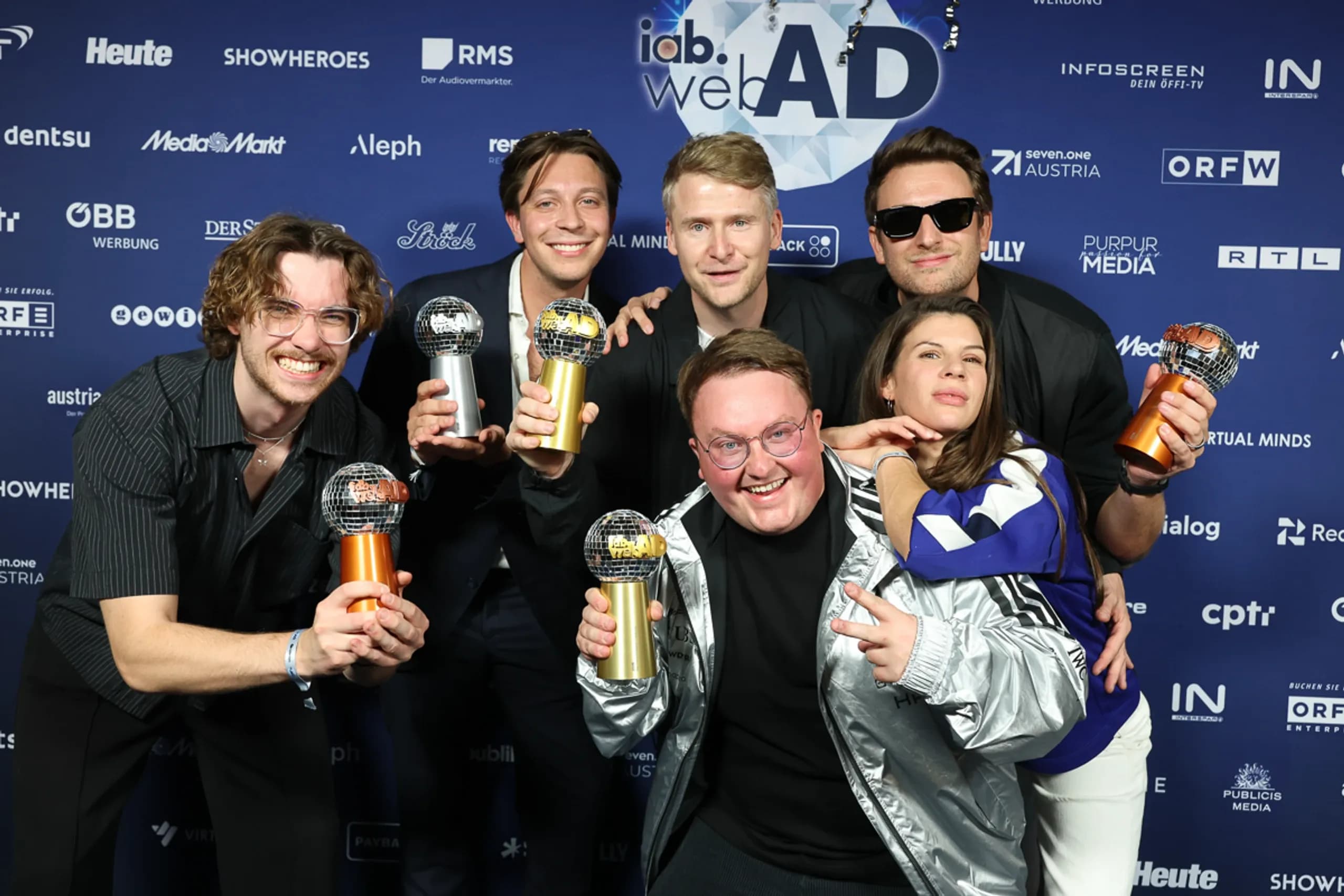
iab webAD 2026: Digiknall wins Gold for Radatz and five awards
Digiknall won five awards at the iab webAD 2026: Gold for Radatz's social media concept, Silver and Bronze for a video …

Effie Awards Austria 2026: Digiknall on the shortlist
Digiknall is on the shortlist for the Effie Awards Austria 2026 with three campaigns for Radatz in four categories. The …

iab webAD 2026: Digiknall shortlisted
Digiknall has been shortlisted with three campaigns in four categories at the iab webAD 2026. Work for WellCard, Radatz …