
Nano Banana: The hype surrounding Google’s new AI image editing tool

The name initially emerged from the community: in tests such as LMArena, the powerful model appeared as an anonymous “Nano Banana” candidate and stood out for its excellent results in blind tests. It mastered complex tasks such as replacing a figure while correctly maintaining the lighting and shadows, something other models often fail at. After the nickname went viral, Google confirmed its identity as the Gemini-2.5-Flash model and opened access via the Gemini platform.
What the tool can do
Nano Banana combines several advanced editing features in one system. Particularly striking is the consistent recognition of people or objects across multiple images. Anyone uploading a portrait can try out different outfits or settings without facial features or distinctive characteristics changing. This works equally well with pets or products, which are convincingly retained in changing scenes.
Precise, language-controlled edits are another focus. In Gemini Studio AI, instructions such as “blur the background slightly”, “change the shirt colour to red” or “adjust the pose” are sufficient, and the AI modifies only the desired areas without redrawing the rest of the image. This also makes it possible to remove distracting elements, colourise black-and-white photos or adjust lighting moods. Results generally appear within seconds, enabling rapid A/B tests for marketing visuals and social media assets.
A third highlight is image fusion. Elements from several uploaded photos are combined into a new scene, taking perspective and lighting into account. This means the results do not look like simple collages. Iterative workflows are also supported: Users can proceed step by step – for example, first colour walls, then add furniture – and the AI keeps the context in mind for subsequent edits.
The model benefits from the Gemini family’s broad world knowledge. It understands complex instructions, interprets simple sketches and can derive visual results from them, for example from a floor plan to an interior visualisation. All generated and edited images also carry Google’s SynthID, an invisible watermark, which marks origin and editing, thereby supporting transparency and the prevention of misuse.
Availability and integrations

The easiest way to get started is via the Google AI Studio website. Users upload a photo or take a new one and enter the desired change as text. Google makes the editing model available as a preview to both free and paying accounts, without any special settings being required.
For developers, Google AI Studio and the Gemini API provide direct access. Basic use is free of charge, while at higher volumes, usage-based fees apply, which are stated in the article as around 0,039 US dollars per image.
An important new development concerns integration into existing creative workflows. Adobe has announced that it will make Nano Banana in Firefly and Express available – and eventually in Photoshop workflows too. This allows creatives to switch between tools while still accessing the same editing model. In addition, Google is collaborating with platforms such as Higgsfield AI and Freepik, where Nano Banana is available as an editing option, for example via dedicated Canvas interfaces. This means that the tool can be used not only in Google apps, but is also increasingly integrating into widely used content pipelines.
Opportunities and risks for social media & marketing
With Nano Banana, “Reality Editing” becomes more accessible than ever. Teams can create visually striking content, test variations and iterate campaigns faster in a very short time. This reduces production costs and democratises professional image design: even smaller brands or solo creators gain access to tools that were previously reserved for expensive shoots or specialised retouchers.
At the same time, authenticity and trust are coming into focus. When images can be altered effortlessly, scepticism about the authenticity of content grows. Brands risk causing confusion if AI editing is used without disclosure. Although SynthID, as an invisible marker, helps with detection, clear communication remains crucial. We recommend using AI confidently but transparently, without losing the human core of the story.
Practical tips
Teams should use Nano Banana specifically for efficiency and creative exploration. It is suitable for rapid A/B testing of advertising visuals, creating cohesive product visuals, seasonal adaptations or illustrative scenes for newsletters and social posts. At the same time, brand values, tone of voice and authenticity should be maintained. Where appropriate, it is advisable to disclose the use of AI. This makes it possible to increase production speed without jeopardising the community’s trust.
Product + Nano Banana + Veo3

A particularly exciting application for marketers arises when their own product images with Nano Banana are generated and then further processed with Veo 3, Google’s flagship video and animation model. For example, a simple photo of a product can be uploaded, placed in Nano Banana in different settings or styles (such as a trainer at a festival, in a studio or in an urban scene), and then brought to life in Veo 3 with matching audio and movement. This turns a static image into a short, brand-compliant video. For social media, this means that instead of having to post just a single product photo, brands can animated storytelling snippets that make the product tangible in context and generate significantly more attention in the feed.
Video prompt: A realistic human hand holding a sharp kitchen knife enters smoothly from the top of the frame and slices open the sausage package in one motion. Immediately as the knife enters the sausage, it explodes with a lot of hot melted cheese
Conclusion
Nano Banana combines powerful, language-controlled image editing, consistent subjects across multiple scenes, realistic image fusion and rapid iteration in one tool. Its availability in Gemini, AI Studio, via APIs and through integrations with Adobe and creative platforms means it quickly finds its way into existing workflows. For social media, this means more creative freedom in less time – coupled with the responsibility to act transparently and protect brand integrity.

Christoph Hofbauer is a photographer and visual artist with a passion for innovative image and video concepts. Through his focus on storytelling and creative image editing, he combines cutting-edge 2D, 3D and AI technologies to deliver exceptional visual projects. As an external consultant for Creative Media & AI Solutions, he also supports the Digiknall team.
Christoph Hofbauer is a photographer and visual artist with a passion for innovative image and video concepts. Through his focus on storytelling and creative image editing, he combines cutting-edge 2D, 3D and AI technologies to deliver exceptional visual projects. As an external consultant for Creative Media & AI Solutions, he also supports the Digiknall team.
More articles
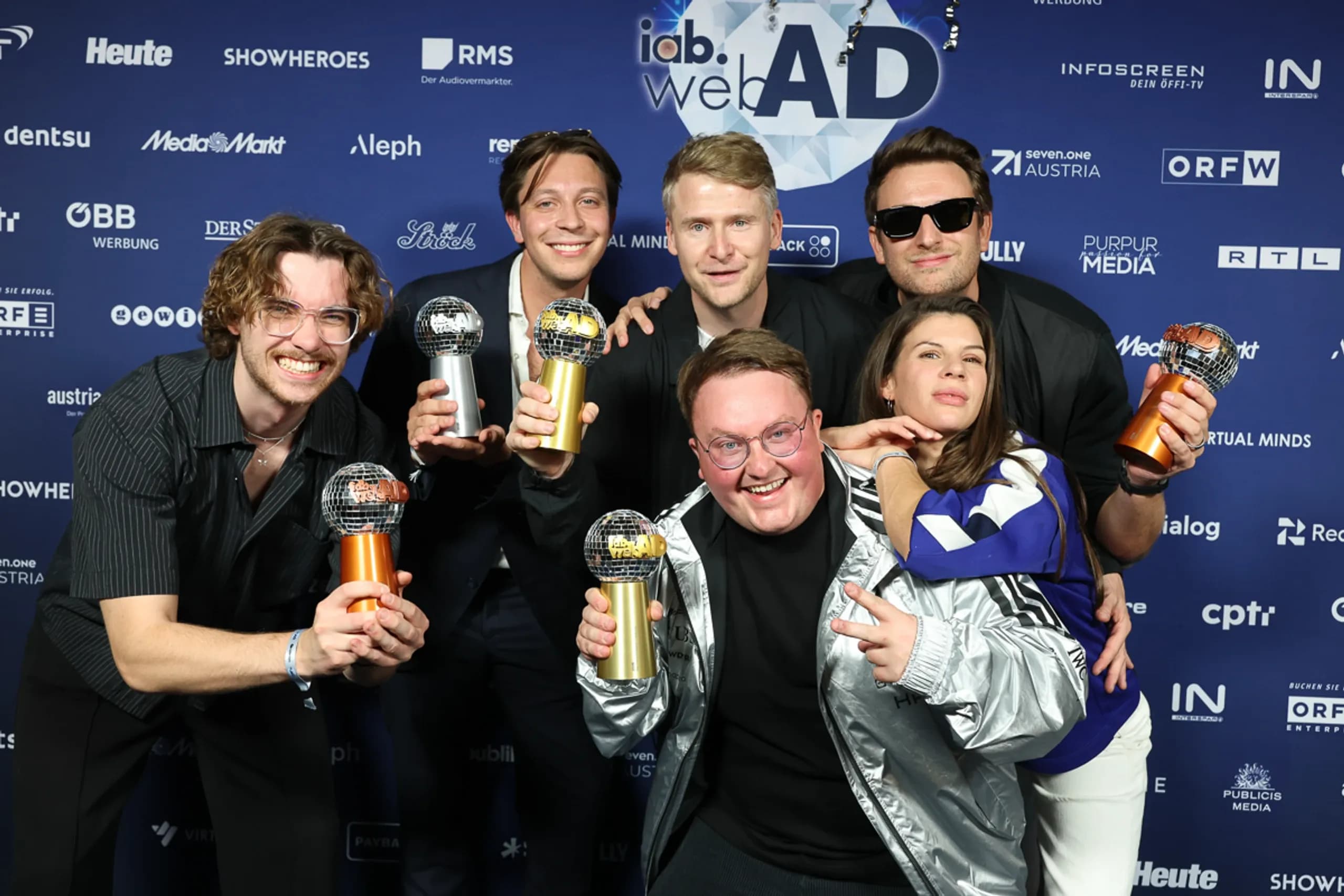
iab webAD 2026: Digiknall wins Gold for Radatz and five awards
Digiknall won five awards at the iab webAD 2026: Gold for Radatz's social media concept, Silver and Bronze for a video …
Effie Awards Austria 2026: Digiknall on the shortlist
Digiknall is on the shortlist for the Effie Awards Austria 2026 with three campaigns for Radatz in four categories. The …

iab webAD 2026: Digiknall shortlisted
Digiknall has been shortlisted with three campaigns in four categories at the iab webAD 2026. Work for WellCard, Radatz …