
🔍 Invisible in ChatGPT? Then you’re missing GEO.

And this is precisely where the new opportunity lies: those who understand and implement GEO now will become a digital First Mover in AI search.
What exactly is GEO?
GEO – short for Generative Engine Optimization – is the evolution of SEO. While SEO is geared towards traditional search engines such as Google, GEO optimises your brand ecosystem for AI-based search and answer systems (e.g. ChatGPT, Gemini, Perplexity).
Unlike a typical list of search results, a Large Language Model (LLM) provides a direct, cited answer – and your brand should appear in that answer. GEO ensures that AI systems understand, cite and take your brand into account in their responses.
🧠 SEO was yesterday – GEO is the new gold standard
The key differences at a glance:
Traditional SEO
- Focus on keywords
- Optimisation for Google
- Goal: ranking on SERPs
- Backlinks matter
- On-site + off-site
Generative Engine Optimisation
- Focus on entities & prompts
- Optimisation for LLMs & AI search
- Goal: being mentioned in AI responses
- Brand mentions and context are crucial
- Plus: PR, Wikipedia, Reddit, citations
📌 GEO strategies you can implement straight away
1. Optimise your brand as an entity
LLMs think in entities, not keywords. Tools such as Google Natural Language API or Inlinks help you analyse how your brand is semantically categorised.
2. Create or update a Wikipedia entry
Wikipedia is one of the top sources in AI responses – according to OtterlyAI, 9,6 % of all citations come from Wikipedia. Your company belongs there!
3. Align PR campaigns around topics
LLMs recognise topic clusters. Use targeted PR to link your brand with the right subject areas – from AI and eCommerce to social responsibility.
4. Use Reddit & forums
Reddit is among the most important training data sources for LLMs. Launch targeted UGC campaigns in relevant subreddits – subtle, valuable, authentic.
5. Integrate quotes, statistics & source references
LLMs favour structured, citable content. Use clear quotes from experts and up-to-date statistics to make your content AI-ready.
6. Provide feedback
Actively use the feedback features in ChatGPT, Gemini & Co. to improve your brand's representation in responses.
7. Ensure your content is crawlable
Many LLMs only read HTML – content loaded via JavaScript or dynamically often remains invisible. Solution: static HTML alternatives or server-side rendering.
📊 New KPIs: What you should measure in GEO
- Visibility in AI responses (e.g. via Otterly.ai)
- LLM referral traffic via GA4 - Google Analytics 4 (regex tracking recommended)
- Mention frequency in citations & AI mentions
- Entity Relevance Score (e.g. via Inlinks)
🌍 GEO for Europe: Prepare strategically now
Although Google AI Overviews have not yet officially been rolled out in the EU, there have already been initial sightings. And as soon as Gemini really takes off here, search traffic will shift dramatically – be ready.
🧨 Conclusion: GEO is not a trend – it is the new standard
Anyone who ignores GEO today will not appear in AI responses tomorrow. GEO is not a replacement, but the evolution of your SEO strategy – and a key building block of modern, future-proof brand communication.

Christoph Hofbauer is a photographer and visual artist with a passion for innovative image and video concepts. Through his focus on storytelling and creative image editing, he combines cutting-edge 2D, 3D and AI technologies to deliver exceptional visual projects. As an external consultant for Creative Media & AI Solutions, he also supports the Digiknall team.
Christoph Hofbauer is a photographer and visual artist with a passion for innovative image and video concepts. Through his focus on storytelling and creative image editing, he combines cutting-edge 2D, 3D and AI technologies to deliver exceptional visual projects. As an external consultant for Creative Media & AI Solutions, he also supports the Digiknall team.
More articles
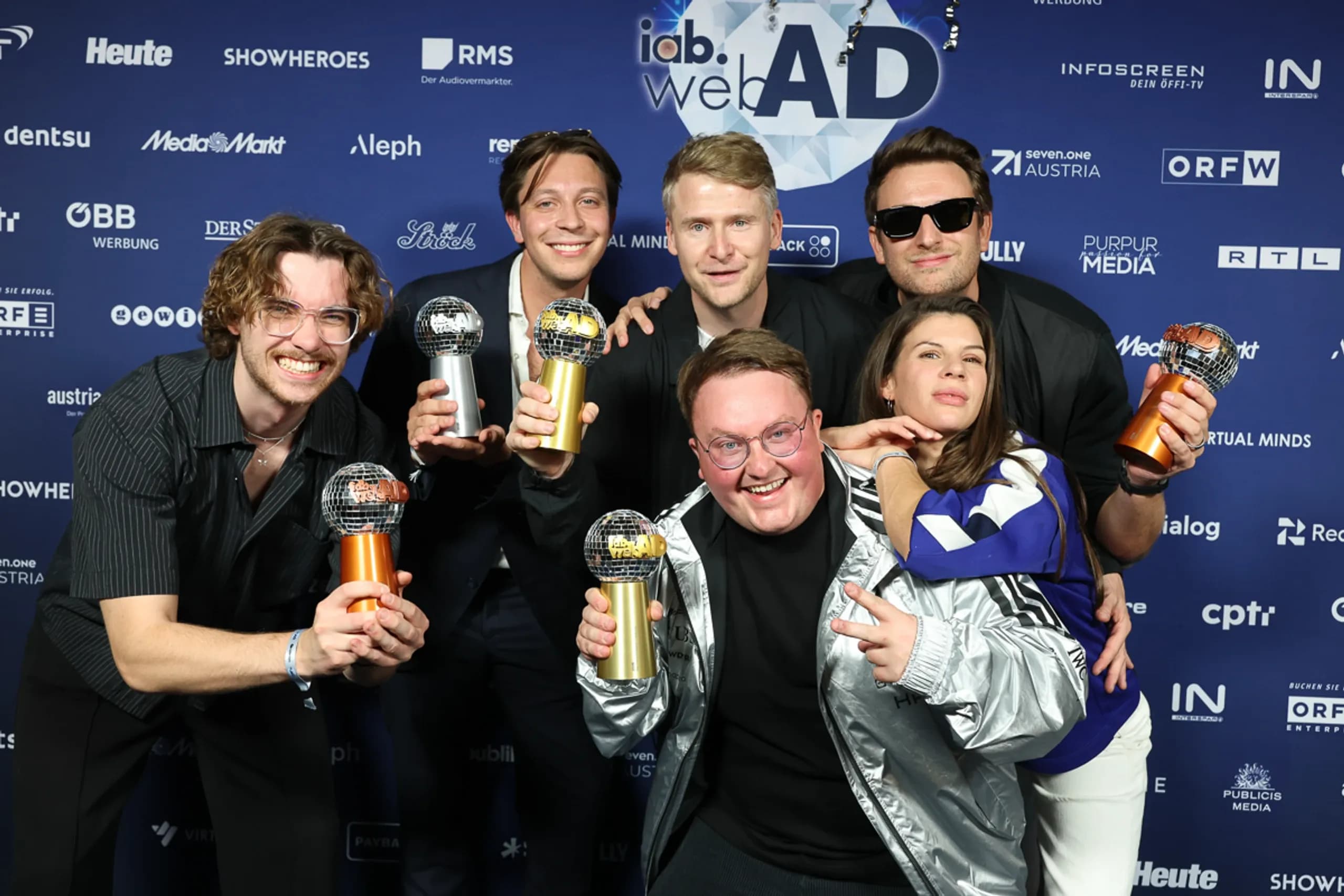
iab webAD 2026: Digiknall wins Gold for Radatz and five awards
Digiknall won five awards at the iab webAD 2026: Gold for Radatz's social media concept, Silver and Bronze for a video …

Effie Awards Austria 2026: Digiknall on the shortlist
Digiknall is on the shortlist for the Effie Awards Austria 2026 with three campaigns for Radatz in four categories. The …

iab webAD 2026: Digiknall shortlisted
Digiknall has been shortlisted with three campaigns in four categories at the iab webAD 2026. Work for WellCard, Radatz …