
„If it works it´s out of date“ (Davie Bowie)

Secret Cyborgs are employees who use AI tools without their employer’s knowledge.
In the case of ChatGPT, 50% of respondents in a Bitkom survey in Germany stated that they use the tool professionally. Of these, 33% do so with their employer’s knowledge, 17% without their employer’s knowledge.
In a nutshell:
A large proportion of the 33% work in a corporate culture that promotes and rewards efficiency and addresses renewal in good time.
The 17% who do it secretly – make an educated guess – probably experience the opposite when it comes to corporate culture, but have their own drive to be more efficient and perhaps simply spend less time on tasks.
But I don’t really want to dwell too much here on AI, the resulting data protection issues, hostile takeover by machines, etc.
Actually, I only wanted your attention with the cyborgs.
Because:
AI is only ONE issue that organisations, management teams, etc. have on the table (should have) and need to assess as „good to do or not“.
Generally speaking, this is how it is – and naturally I see it more through the lens of strategic communication:
There is a hell of a lot going on; the world of communication moves very fast. Honestly, I think it is too fast. It is overwhelming; new trends emerge every day, some stay, some disappear again very quickly. I am not only writing here about the digital world. There is also the analogue one. And there is a strong interplay between the two worlds (yes, believe it or not).
I have been working in communications since 1995. So I am older than the roll-out of email, the www – and TikTok is a baby compared to me. The first telephone I can remember was a landline with a rotary dial and a so-called quarter line (meaning 4 flats in one building shared a copper wire, but you did have your own number ;) – which meant there was a button on the telephone that you had to press, and when it clicked and you got a dial tone, you could call someone.
That was also the time when you arranged to meet and, if you were 5min late, you did not send 10 messages and quickly share your digestive problems, professional trivialities or the view from the tram with others 7 times via 13 WhatsApp messages and 12 Slack groups. You were simply a little late. We survived it.
And now to the present day – let’s look at the professional context.
As mentioned above:
There is a hell of a lot going on, the world of communication moves very fast. Frankly, I think it is too fast. It is overwhelming; new trends emerge every day, some stay, some disappear again very quickly.
Marketing / communications, etc. managers are faced with a flood of information, advice, trends and therefore decisions.
Anyone who says, ‘It’s not like that for me,’ is either one of the 0,1% superstars or has given up.
Specifically, I see 3 core issues:
1) Organisations and their decision-makers have a general understanding of the situation currently changing, but struggle to assess what it really means for them personally.
2) Many organisations think that their business segment is specific and not comparable to others, and therefore requires ‘special’ solutions.
3) There is a strong focus on technology and tools, as well as on activating new channels with a ‘we’ll do that too’ approach.
While 1) is unsurprising and understandable, 2) is simply wrong (we are always talking about the same people or ‘target groups’, aren’t we?) and 3) is also understandable, but should never be the focus.
It is almost as though ‘we don’t really know what is going on or how we can solve the challenges, but let’s try a new tool and move to TikTok too’ seems to be the cure, but – if it cures anything at all, it only cures symptoms.
Due to the above-mentioned oversupply of (including SaaS) tools and channels, it is easy to shift responsibility onto ‘the CRM’ or ‘TikTok’.
So what are we missing here? What is ‘the elephant in the room’?
Well:
Organisations (people?) simply are not ready and willing to change. They are afraid and react rather than act. That is no wonder.
We throw around fancy department and job titles, launch activities that lead to no KPIs, and blame technology and channels for not delivering the best possible performance. Sometimes we do not even know how good we could be if we took bolder strategic steps.
The elephant in the room is ignorance and the inability to adapt mindsets and structures to growth.
And to understand that:
“The day we stop worrying about our job, our business or a meeting, and instead care about the success of our customers, is the day we grow again.” (Donald Miller)
And: technology and tools have actually made it easier.
But as always: a good balance is better than black and white.
So that I myself can focus and provide support in projects to achieve business goals and grow, I came up with a little “Playground Model".
It’s not rocket science – also because I think none of this is rocket science either – as long as – and this is what sets the Playground Model apart – you are aware that the centre (drum roll) is our customers, users and fellow human beings.

A brief user guide:
If I know that my core audience travels a particular route on the Underground every day, then the first thing I would consider is being present exactly there every day.
And to put it in very black-and-white terms -> no, that does not mean I have to use all the channels theoretically available to me. Especially not if I do not have the resources for it, and perhaps not the know-how either.
And so the circle is complete, because:
If organisations / companies / management teams / people only start having these general thoughts when there is a major problem and not when I can plan, develop, etc. in peace (cf. “If it Works it ́s out of date”) – then, dear people, it becomes “crisis management” rather than a “pleasant, agile and structured” growth process.

Born in 1976. He has 29 years of professional experience and is currently working on projects in tourism, art and culture, the entertainment business and the start-up sector. Even though a one-person business does not actually need its own company name, nobullshit.rocks was chosen consciously and with complete seriousness. Really.
Born in 1976. He has 29 years of professional experience and is currently working on projects in tourism, art and culture, the entertainment business and the start-up sector. Even though a one-person business does not actually need its own company name, nobullshit.rocks was chosen consciously and with complete seriousness. Really.
More articles
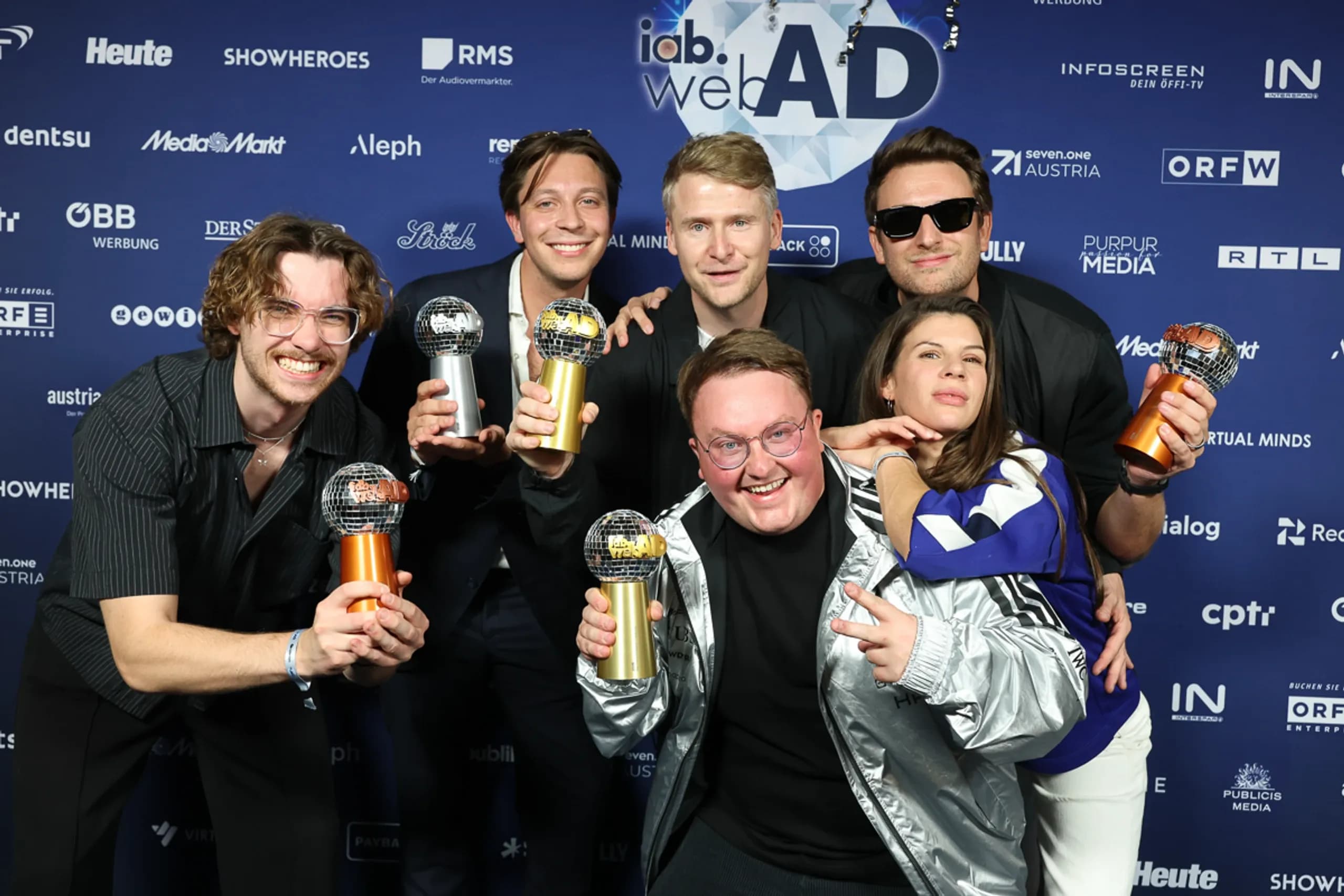
iab webAD 2026: Digiknall wins Gold for Radatz and five awards
Digiknall won five awards at the iab webAD 2026: Gold for Radatz's social media concept, Silver and Bronze for a video …
Effie Awards Austria 2026: Digiknall on the shortlist
Digiknall is on the shortlist for the Effie Awards Austria 2026 with three campaigns for Radatz in four categories. The …

iab webAD 2026: Digiknall shortlisted
Digiknall has been shortlisted with three campaigns in four categories at the iab webAD 2026. Work for WellCard, Radatz …