
3, 2, 1: Vote! How politicians win the social media election campaign!


During the period under review from 1 July to 22 September, we looked at and scrutinised the lead candidates of the five parties represented in the National Council. The FPÖ stands out here with a large number of followers. Herbert Kickl's Facebook, TikTok and Instagram channels take the top three places in the ranking. The minor role played by TikTok channels in the election campaign is also clearly evident. With the exception of the FPÖ lead candidate's TikTok channel, they occupy the bottom places.

The balance of power becomes clear not only in terms of followers, but above all in terms of total interactions on the respective profiles: Herbert Kickl's Facebook account accounts for over 56% of all interactions across the channels analysed. Together with Instagram and TikTok, this amounts to over 68%. SPÖ lead candidate Andreas Babler ranks second, driving engagement primarily on the Meta platforms Facebook and Instagram.

While most channels publish between 1 and 2 posts per day on their respective channels, Herbert Kickl's Facebook account stands out. Since the beginning of July, the channel with the most followers has averaged 4,84 posts per day, with an engagement rate of 1,9%. Due to this posting frequency, more than one in three Facebook posts comes from Herbert Kickl. With fewer posts but higher engagement rates of 32% and 28% respectively, Babler's and Meinl-Reisinger's TikTok accounts stand out.
The individual candidates in a quick check
Karl Nehammer - ÖVP

The current Federal Chancellor increasingly relies on Instagram and Facebook Reels from TV debates and press conferences, as well as updates on current issues. In addition to Reels, there are also photos and occasional quotes highlighted by textual elements. TV debates are promoted with announcements. Co-author posts are created with the accounts of the federal party as well as other party colleagues. Videos from Instagram and Facebook are mirrored on TikTok.
Andreas Babler - SPÖ

With an average engagement rate of 13%, Andreas Babler takes first place in the comparison of lead candidates. Alongside emotional speeches from events, he also posts videos with an authentic feel directly from his motorhome or just before TV debates. On TikTok, as with the ÖVP lead candidate, videos are mirrored and platform trends are also addressed. With the #Tourtagebuch, a video diary from the motorhome in which the lead candidate tours the country is occasionally published.
Herbert Kickl - FPÖ

3 out of 4 creatives from the blue lead candidate end up on his Facebook account. There, he keeps his large fan base up to date with a mix of images and videos. With a share of 8% in link posts, Herbert Kickl leads in this type of creative. These link both to the Freedom Party's website and to current press articles to which the FPÖ responds and expresses its opinion. The more than 2,6 million interactions reached clearly show that the content polarises and encourages people to comment or forward the creatives to friends.
Werner Kogler - The Greens

The Green lead candidate delves into environmental issues in his content and also shares insights into his work as Vice-Chancellor on his social media channels. Kogler also indicates in every post whether it concerns his work as Federal Minister or his role as party chair. Each post is accordingly marked with the abbreviation BM or GR. Alongside TV clips, the feed also features videos from events and press conferences, presented as Reels or videos.
Beate Meinl-Reisinger - NEOS

The pink party leader relies most heavily on Reels, in which she focuses not only on a mix of clips from existing TV material but also on specially produced videos. In addition to videos, the channel features photos from Meinl-Reisinger's everyday life as well as authentic situations, such as at a sausage stand. Most videos are posted jointly with the federal party in a co-author format. Despite posting irregularly on TikTok, she is canvassing for votes with some specially produced videos.
💶 Election campaign ads at a glance

No election campaign without social media ads! The closer election day gets, the more ads are also being placed on social media. The last 90 days clearly show that the FPÖ is spending the most money on Meta through the channels of its lead candidate as well as the federal party. More than € 200.000,- was spent on Meta platforms between 25 June and 22 September alone. Included are classic election campaign visuals, short videos and longer videos, which are primarily delivered to target groups on Facebook using advertising budgets. The ÖVP ranks second, with the SPÖ somewhat behind in third place, while the Greens and NEOS have roughly equal spending in the final two places. In addition to the advertising expenditure of the lead candidates and federal parties, there are further expenses from regional and district organisations, as well as party officials or constituency candidates.
The ÖVP scores with personalised advertising visuals for individual districts. This resulted in over 1 100 different ads on the current Federal Chancellor’s channel between 1 July and 22 September. The ads include not only classic advertising messages, but also event invitations, such as the one for the FPÖ’s election finale. In addition to comparisons with other parties, such as the Greens and NEOS, youth language is also used to reach the respective selected target groups and encourage them to cast their vote for the respective party on 29 September.

Particularly when it comes to ads in the political sphere, restrictions must be expected on Meta platforms: on the one hand, special verification is required in order to place political advertising. On the other hand, Meta drastically restricts ad placements. Advertising can only be placed in the Facebook Feed, Instagram Feed and Instagram Stories. The publication of political ads is also subject to a longer review process by the platform.
Who makes the best Meta ads?
The People’s Party clearly stands out as a best-practice example. Ads relevant to the target group are delivered directly to narrowly defined target groups. By focusing on individual districts with smaller budgets per ad, this can build a sense of closeness with recipients – which definitely boosts the credibility and relatability of the ads. The ÖVP also scores with Gen Z ads that are only delivered to narrowly defined target groups, addressing them effectively and thus seeking to convince voters in the final stretch.
💥 But it really kicks off further down the ranks:
It is not only the economy that dislikes stagnation – the social media world does too. Especially at election time, the focus is on leading politicians. A certain amount of channel growth is therefore inevitable. Since July, however, Sepp Schellhorn has stood out, reaching a peak in growth primarily with a video about the prevailing bureaucracy in Austria. This enormous increase is clearly visible on both Instagram and TikTok.

NEOS economic affairs spokesperson Sepp Schellhorn stands out particularly further down the ranks: with a post interaction rate of over 94% and a posting frequency of around every 2 days, he is among the frontrunners – and is also challenging the parties’ lead candidates to a digital battle. On Instagram too, he is among the frontrunners with an interaction rate of 13%. The largest channels in list positions 2 and 3 belong to Alma Zadić.

3 hacks for political campaigning on social media
At a time when politicians are increasingly repeating the same phrases on social media, their authenticity is receding further and further into the background. Their content is often limited to excerpts from speeches, TV interviews or events that appear extremely polished. Yet authenticity plays a crucial role on social media in reaching people and building trust. Formats that convey the character and personality of a political figure in an authentic way are particularly successful. Such content is not only more accessible, but also appeals to users on an emotional level – far removed from political content. Alongside a perfect hook, it is therefore essential to focus on real and unfiltered insights into the lives and work of politicians.
Hack 1: A hook that packs a punch!
Attention spans on social media are short: only the first 0,4 seconds determine whether users watch a video in the vertical short-video feed or scroll on. “Sepp, what do you think?” is a recurring hook in the video that immediately grabs attention from the very first moment. Furthermore, the hook appears in every video on this channel – making the content easier to recognise. So always put the most attention-grabbing scenes at the beginning of your video content!

Hack 2: Sharpen authenticity!
Politicians often appear polished: excerpts from TV interviews, glossy photos or scripted episodes. Excerpts that could occur exactly like this in real life create not only authenticity, but above all exclusive content on social media. Restaurateur Sepp Schellhorn thus remains in his kitchen, explains Austrian politics and presents his political content natively. So create content that cannot be found in this form on any other medium!

Hack 3: Politicians are creators, not billboards!
A politician on social media is more than a duplicate of all the parties’ billboards. The social media ego show with glossy images, campaign slogans and “perfect” posts has to stop! Become a creator and try out creative formats that reflect your personality. Show your work, your values and your messages not in texts, but let viewers immerse themselves directly in your position. Alongside Sepp Schellhorn, Fidias is a best-case example. The young YouTuber was only elected as a Member of the European Parliament in Cyprus in June and has since been taking his followers on a journey to Brussels and Strasbourg.

Our recipe for successful content: a good hook ➕ authenticity ➕ thinking of politicians as creators 🟰 content that 💥!

A creative with a strong affinity for numbers. In his spare time, he occasionally plays with a brass band. Tobias loves developing creative campaigns that make a bang. At the same time, he is a numbers person who is reluctant to make decisions based on gut feeling. Always open to a good espresso.
A creative with a strong affinity for numbers. In his spare time, he occasionally plays with a brass band. Tobias loves developing creative campaigns that make a bang. At the same time, he is a numbers person who is reluctant to make decisions based on gut feeling. Always open to a good espresso.
More articles
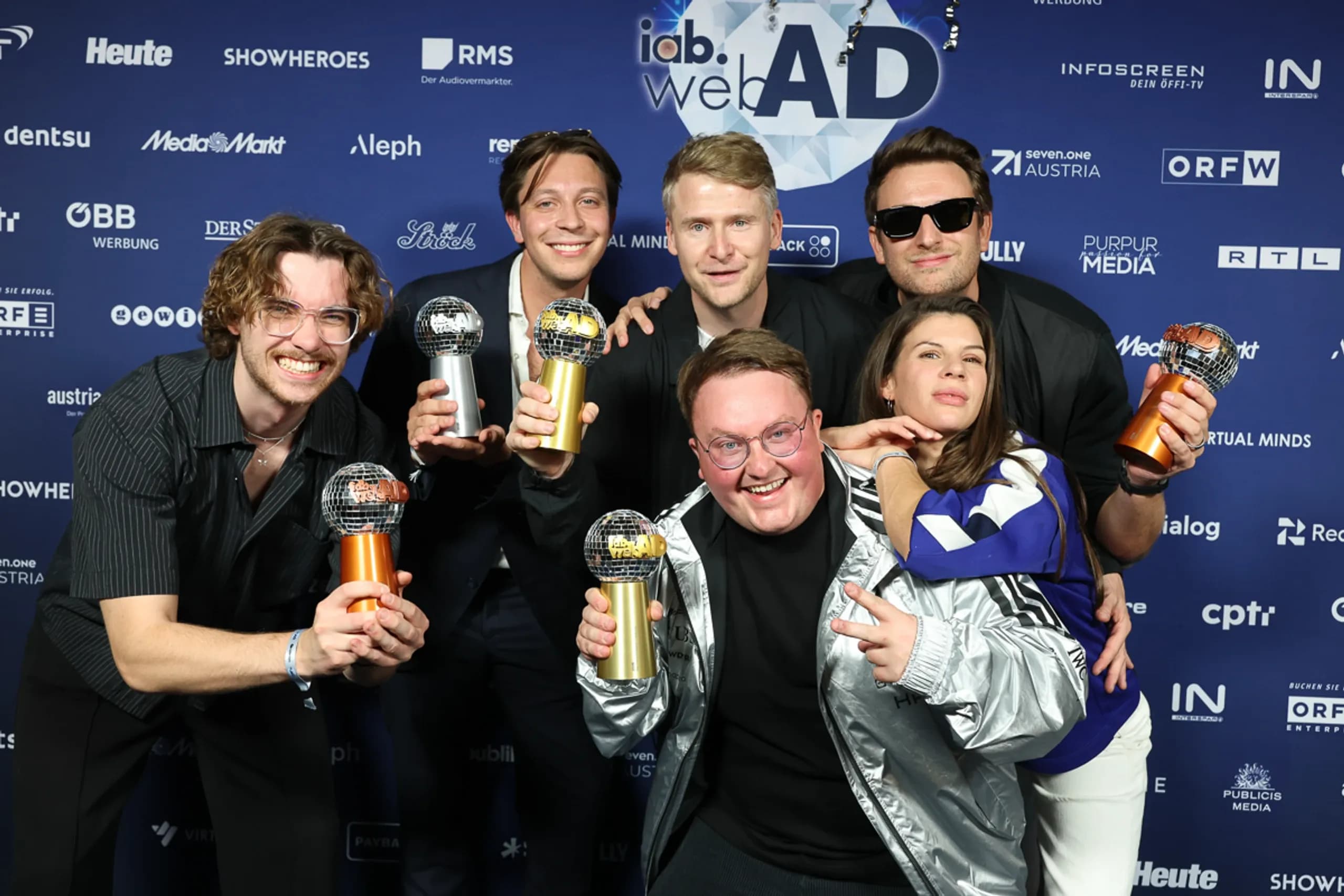
iab webAD 2026: Digiknall wins Gold for Radatz and five awards
Digiknall won five awards at the iab webAD 2026: Gold for Radatz's social media concept, Silver and Bronze for a video …
Effie Awards Austria 2026: Digiknall on the shortlist
Digiknall is on the shortlist for the Effie Awards Austria 2026 with three campaigns for Radatz in four categories. The …
iab webAD 2026: Digiknall shortlisted
Digiknall has been shortlisted with three campaigns in four categories at the iab webAD 2026. Work for WellCard, Radatz …